Commanding the street with clarity.
A practical operational protocol for transit supervisors. Learn to manage unexpected delays, resolve platform conflicts, and support your front-line operators.
01
Service Recovery
02
De-escalation
03
Operator Support
Managing real-time street delays.
When headway gaps widen, field decisions must be immediate. Follow this structured protocol to restore scheduled frequency without overloading your operators.
1. Assess the headway gap
Emergency recovery rule
Identify the spacing between vehicles. Do not rely solely on dispatch screens; verify physical street conditions and passenger loads before ordering a short-turn.
Never order a drop-back or short-turn that leaves an operator without their federally mandated recovery break at the terminal.
2. Coordinate the recovery
Communicate clearly with dispatch to adjust the block schedules. Ensure the trailing operator is prepared to absorb the excess passenger load safely.
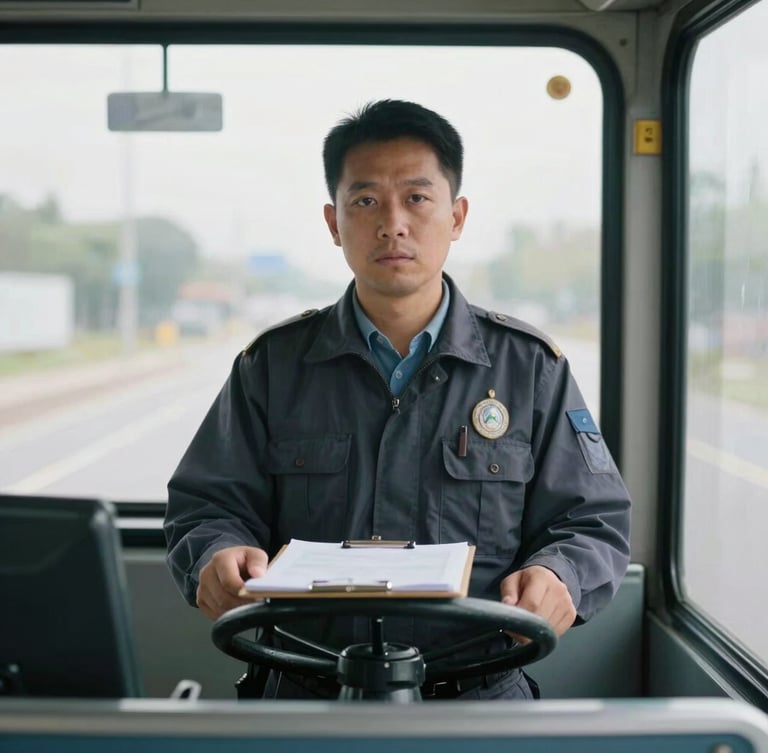
De-escalation on the platform.
Conflict on a transit vehicle requires a calm, authoritative presence. Shift the focus from policy enforcement to practical space management, giving operators a safe buffer to perform their duties.
Supporting the front line
Your operators face intense daily stress. Bridge the gap between rigid dispatch directives and the physical realities of the road by backing their field decisions.
Ready for the road?
Access our complete library of operational manuals, written by veterans who know the street.